


Page 450 - Economia Azul - versão: inglês
P. 450
4. Private sector benefiting from observed data and advances in
                                                                                                                                operational oceanography

                                                                                                                                   Despite the Blue Economy concept,     by  tidal  and  wind  effects.  Daily  sampling
                                                                                                                                combining oceanography development       of freshwater inputs and river sediments
                                                                                                                                opportunities with the defense and protec-  is necessary for biogeochemical investiga-
                                                                                                                                tion of the environment, it is still subject   tion, harmful algal blooms, and impact of
                                                                                                                                to debates, in particular regarding gov-  pollutants in coastal areas. The prediction
                                                                                                                                ernance and potential conflicts between   of  garbage  scattering,  pollutant  diffusion
                                                                                                                                stakeholders (Voyer et al., 2018; CISNERO   and oil slick displacement in coastal regions
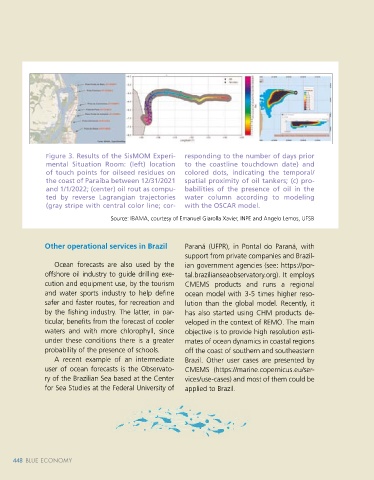
               Figure 3. Results of the SisMOM Experi-  responding to the number of days prior                                  -MONTEMAYOR, 2021), a number of mar-     requires modeling at a scale of at least 1
               mental Situation Room: (left) location   to the coastline touchdown date) and
               of touch points for oilseed residues on   colored dots, indicating the temporal/                                 kets or sectors are already clearly defined.   km and at high frequency that considers
               the coast of Paraíba between 12/31/2021   spatial proximity of oil tankers; (c) pro-                             Table 1 shows the sectors used by CMEMS   the effects of tides and the coupling with
               and 1/1/2022; (center) oil rout as compu-  babilities of the presence of oil in the                              and some are associated with relevant ap-  the boundary layer of the atmosphere.
               ted  by reverse  Lagrangian  trajectories   water column according to modeling                                   plications in Brazil and VOEs. Also identified   The  correction  of  these  models  with  the
               (gray stripe with central color line; cor-  with the OSCAR model.                                                in the table are observations that support   observations through the assimilation and

                                  Source: IBAMA, courtesy of Emanuel Giarolla Xavier, INPE and Angelo Lemos, UFSB               sectors,  potential  developments  and  tar-  improvement of the models requires spe-
                                                                                                                                get users. The South Atlantic observation-  cific efforts, for example, with the creation
                                                                                                                                al system (FOLTZ et al.2019) already offers   of a network of high frequency radar that
              Other operational services in Brazil      Paraná (UFPR), in Pontal do Paraná, with                                data from PIRATA, Argo and satellites that   would complement meteorological radar.
                                                        support from private companies and Brazil-                              allow  adequate  corrections  of  mesoscale   Close to ports, tide gauges and other sen-
                 Ocean forecasts are also used by the   ian government agencies (see: https://por-                              ocean circulation models. Recent efforts   sors could provide the required reference
              offshore oil industry to guide drilling exe-  tal.brazilianseaobservatory.org). It employs                        in biogeochemical modeling together with   of the “truth” of the physical state for fore-
              cution and equipment use, by the tourism   CMEMS products and runs a regional                                     assimilation of chlorophyll and color data   casting systems.
              and water sports industry to help define   ocean model with 3-5 times higher reso-                                from satellites, for example, provide access   Table 2 presents a non-exhaustive list of
              safer and faster routes, for recreation and   lution than the global model. Recently, it                          to the description of some key parameters   applications where observed data are used,
              by the fishing industry. The latter, in par-  has  also  started  using  CHM  products  de-                       of  the biological  and carbon cycle  at  the   tools and approaches, observational sys-
              ticular, benefits from the forecast of cooler   veloped in the context of REMO. The main                          mesoscale, as presented in the CMEMS     tems and users or potential users of the in-
              waters and with more chlorophyll, since   objective is to provide high resolution esti-                           catalogue. This allows for the development   formation. It can be seen that only part of
              under these conditions there is a greater   mates of ocean dynamics in coastal regions                            of applications and services associated   those interested in Brazil today can benefit
              probability of the presence of schools.   off the coast of southern and southeastern                              with large-scale climate variability. Howev-  from operational oceanography and ocean
                 A recent example of an intermediate    Brazil. Other user cases are presented by                               er, close to the coast and at smaller scales,   services. In practice, key products for most
              user of ocean forecasts is the Observato-  CMEMS (https://marine.copernicus.eu/ser-                               many applications relevant to some initia-  Essential  Climate  Variables  (ECVs)  and
              ry of the Brazilian Sea based at the Center   vices/use-cases) and most of them could be                          tives and users around the world are not yet   EOVs on a medium scale in time and space
              for Sea Studies at the Federal University of   applied to Brazil.                                                 ready to  be operationalized  by interested   are now offered by international centers
                                                                                                                                parties in Brazil. A coastal observation pro-  such as CMEMS and NOAA, or by Brazil-
                                                                                                                                gram with high observational density is still   ian initiatives such as REMO. Such products
                                                                                                                                needed along with high resolution models,   are fully used by the research and academ-
                                                                                                                                bathymetry and assimilation, to provide   ic community  in Brazil,  which is  the first
                                                                                                                                better estimation of local sea level rises   beneficiary of the existing advances. These


     448   BLUE ECONOMIY                                                                                                                                                                        From Observation to Data Use  449
     448   BLUE ECONOMY

