


Page 701 - Economia Azul - versão: inglês
P. 701
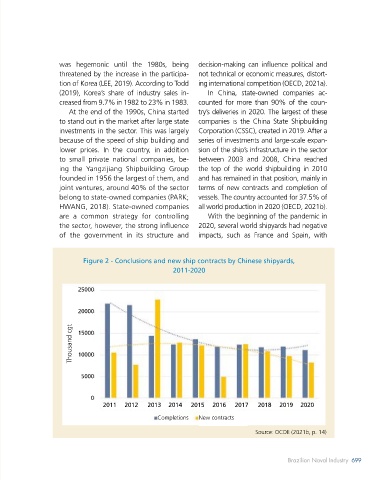
Figure 1 - Major Canadian government shipbuilding programs   was hegemonic until the 1980s, being   decision-making can influence political and
 in the post-World War II period  threatened by the increase in the participa-  not technical or economic measures, distort-
                   tion of Korea (LEE, 2019). According to Todd   ing international competition (OECD, 2021a).
                   (2019), Korea’s share of industry sales in-  In China, state-owned companies ac-
 Royal  Restigouche   Annapolis   Halifax   creased from 9.7% in 1982 to 23% in 1983.  counted for more than  90% of  the coun-
 Canadian  Class (1953-  Class (1960 -  Class (1987-  At the end of the 1990s, China started   try’s deliveries in 2020. The largest of these
 Navy  1959)  1964)  1996)
                   to stand out in the market after large state   companies is the China State Shipbuilding
                   investments in the sector. This was largely   Corporation (CSSC), created in 2019. After a
                   because of the speed of ship building and   series of investments and large-scale expan-
 1910  [...]  1950  1960  1970  1980  1990  2000  2010  lower prices. In the country, in addition   sion of the ship’s infrastructure in the sector
                   to small private national companies, be-  between 2003 and 2008, China reached
                   ing  the  Yangzijiang  Shipbuilding  Group   the top of the world shipbuilding in 2010
                   founded in 1956 the largest of them, and   and has remained in that position, mainly in
 St. Laurent   Mackenzie  Iroquois  National  joint ventures, around 40% of the sector   terms of new contracts and completion of
 Class (1950 -  Class (1958 -   Class (1969-   Shipbuilding  belong to state-owned companies (PARK;   vessels. The country accounted for 37.5% of
 1957)  1963)  1973)  Strategy
                   HWANG, 2018). State-owned companies      all world production in 2020 (OECD, 2021b).
                   are a common strategy for controlling       With the beginning of the pandemic in
 Source: Barreto (2020, p. 46)  the sector, however, the strong influence   2020, several world shipyards had negative
                   of the government in its  structure  and    impacts, such as France and Spain, with

 guaranteeing free competition in the mar-  Governments assume specific policies to
 ket. A few years later, the OECD itself asked   ensure the competitiveness of their indus-  Figure 2 - Conclusions and new ship contracts by Chinese shipyards,
 countries to intervene to support their ship-  tries, however, geopolitical alliances can de-  2011-2020
 yards and guarantee the capacity of these   fine the choice of vessel design considering
 structures (TODD, 2019).  interoperability between nations in the case   25000
 Thus, the United Kingdom was the   of joint operations. Another great character-
 great birthplace of the modern naval in-  istic of the naval industry is the change in   20000
 dustry, with a prominent Navy and keeping   relation to the countries that lead the inter-
 Western Europe at the center of the world   national market. In the 1960s, Europe lost   15000
 market until the mid-1960s. Despite their   its position as the largest industry to Japan   Thousand cgt
 prominence on the international stage,   and, later, in the 1980s, to South Korea and
 countries also depended heavily on state   China (BOTELHO, 2007).  10000
 aid to maintain their production. (Idem). It   In the 1950s and 1960s, Japan used the
 is important to highlight that, despite the   shipbuilding sector to generate employment   5000
 characteristics of shipyards being funda-  and income for society and rebuild its indus-
 mental in international purchases, as they   trial park after World War II. One of the coun-  0
 influence the quality and technological   try’s strategies was to control 35% of the   2011  2012  2013  2014  2015  2016  2017  2018  2019  2020
 development of vessels, the specificities of   national shipyards through the creation of   Completions   New contracts
 countries and their bilateral relations also   a government agency. Thus, the dominance
 interfere in the choice (LEE, 2019).  of the international market by the country     Source: OCDE (2021b, p. 14)


 698  BLUE ECONOMYBLUE ECONOMY                                                        Brazilian Naval Industry 699
 698

