


Page 707 - Economia Azul - versão: inglês
P. 707
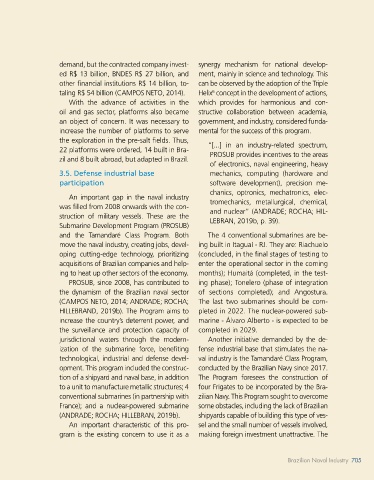
Figure 5 – Estimate of Prorefam Investment Values  demand, but the contracted company invest-  synergy  mechanism  for  national  develop-
                   ed R$ 13 billion, BNDES R$ 27 billion, and   ment, mainly in science and technology. This

 Plans       Number of Vessels   Values  (R$ million
                   other financial institutions R$ 14 billion, to-  can be observed by the adoption of the Triple
 Prorefam 1 (1991)     19   1.425                           Helix  concept in the development of actions,
 1
                                                                6
 Prorefam 2 (2004)    58  4.350  taling R$ 54 billion (CAMPOS NETO, 2014).
 Prorefam 3 (2008)    146  10.950  With the advance of activities in the   which provides for harmonious and con-
 Total       223   16.725  oil and gas sector, platforms also became   structive collaboration between academia,
 Vessels delivered (  an object of concern. It was necessary to   government, and industry, considered funda-
 (until December 2012)   90   6.750  increase the number of platforms to serve   mental for the success of this program.
 New Needs (2016)      90   6.750
                   the exploration in the pre-salt fields. Thus,
 Author’s elaboration and estimates  22 platforms were ordered, 14 built in Bra-  “[...] in an industry-related spectrum,
 Note: The values of twenty upgrades carried out in this first stage are not included.  PROSUB provides incentives to the areas
                   zil and 8 built abroad, but adapted in Brazil.
 Source: Campos Neto, 2014, p.113                              of electronics, naval engineering, heavy
                   3.5. Defense industrial base                mechanics, computing (hardware and
 Development, the National Bank for Eco-  three premises: “i) to build ships in Brazil;   participation  software development), precision me-
 nomic and Social Development (BNDES),   ii) achieve a minimum nationalization rate   chanics, optronics, mechatronics, elec-
 the Brazilian Institute of Oil, Gas and Bio-  of 65% (in its first phase) and 70% (in its   An important gap in the naval industry   tromechanics,  metallurgical,  chemical,
 fuels (IBP), and Petrobras was the Mobili-  second); and iii) achieve, with the develop-  was filled from 2008 onwards with the con-  and nuclear” (ANDRADE; ROCHA; HIL-
 zation Program for National Oil and Gas   ment of the program, through the learning   struction of military vessels. These are the   LEBRAN, 2019b, p. 39).
 Industry (Prominp), which aimed to “maxi-  process and revitalization of the ship parts   Submarine Development Program (PROSUB)
 mize the participation of the national goods   industry, internationally competitive prices”.  and the Tamandaré Class Program. Both   The 4 conventional submarines are be-
 and services industry, on a competitive and   According to Campos Neto (2014),   move the naval industry, creating jobs, devel-  ing built in Itaguaí - RJ. They are: Riachuelo
 sustainable basis, in the implementation   Promef had two phases, the first started in   oping cutting-edge technology, prioritizing   (concluded, in the final stages of testing to
 of oil and natural gas projects in Brazil and   2005 and the second in 2008. In the first   acquisitions of Brazilian companies and help-  enter the operational sector in the coming
 abroad” (BARAT; CAMPOS NETO; PAULA,   phase, 23 ships would be delivered, while   ing to heat up other sectors of the economy.  months); Humaitá (completed, in the test-
 4
 p.55). The program had the participation of   in the second 26  vessels were expected.  PROSUB, since 2008, has contributed to   ing phase); Tonelero (phase of integration
 several organizations, in addition to those   In 2008, Petrobras started the Bra-  the dynamism of the Brazilian naval sector   of sections completed); and Angostura.
 mentioned above. Its operation was carried   zilian Shipping Company Program (EBN   (CAMPOS NETO, 2014; ANDRADE; ROCHA;   The last two submarines should be com-
 out by sectoral committees so that there   Program), which aimed to encourage the   HILLEBRAND, 2019b). The Program aims to   pleted in 2022. The nuclear-powered sub-
 would be greater synergy between the ar-  emergence of national private shipowners   increase the country’s deterrent power, and   marine - Álvaro Alberto - is expected to be
 eas involved in the oil and gas industry, in   to reduce the need to hire foreign compa-  the surveillance and protection capacity of   completed in 2029.
 addition to having conducted professional   nies, since the market was heated, and the   jurisdictional waters through the modern-  Another initiative demanded by the de-
 qualification actions for the sector (Idem).  country did not want to face the difficulty   ization of the submarine force, benefiting   fense industrial base that stimulates the na-
 The Fleet Modernization and Expansion   of obtaining charter contracts. These deliv-  technological, industrial and defense devel-  val industry is the Tamandaré Class Program,
 Program (Promef), which was conducted   eries should occur by the year 2017 (Idem).  opment. This program included the construc-  conducted by the Brazilian Navy since 2017.
 by  Petrobras  (Transpetro) from  2004,  also   In addition to the contracting of vessels   tion of a shipyard and naval base, in addition   The Program foresees the construction of
 dealt with the contracting of vessels, how-  within the exposed programs, Petrobras   to a unit to manufacture metallic structures; 4   four Frigates to be incorporated by the Bra-
 ever with a peculiarity: the contracts were   had demands for platforms and rigs moti-  conventional submarines (in partnership with   zilian Navy. This Program sought to overcome
 acquisitions and not chartering. According   vated by the discovery of the pre-salt zone.   France); and a nuclear-powered submarine   some obstacles, including the lack of Brazilian
 to Campos Neto (2014, p. 119), the main   Thus, 29 rigs were contracted for 15 years.   (ANDRADE; ROCHA; HILLEBRAN, 2019b).  shipyards capable of building this type of ves-
 objective of the program was to modernize   This venture was not financed by the FMM,   An important characteristic of this pro-  sel and the small number of vessels involved,
 and expand the Transpetro fleet based on   due to the lack of a specific line for this    gram is the existing concern to use it as a   making foreign investment unattractive. The


                                                                                      Brazilian Naval Industry 705
 704  BLUE ECONOMY                                                                    Brazilian Naval Industry  705

