


Page 96 - Economia Azul - versão: inglês
P. 96
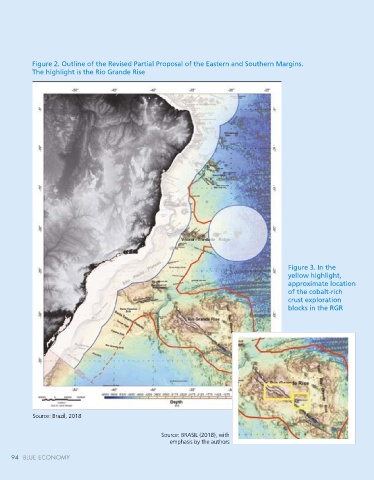
Figure 2. Outline of the Revised Partial Proposal of the Eastern and Southern Margins. the RGR ‘s mining potential was only lightly When analyzing samples collected by
The highlight is the Rio Grande Rise scratched on the surface. the SGB-CPRM at RGR, Souza (2019) con-
The surveys carried out by the SGB-CPRM cluded that the “base metal content resem-
must still generate, and will generate, rele- bles the content of hydrogen crusts from
vant knowledge about mineral deposits at other parts of the world (Co=0.65-1.04%
the RGR, either from the SGB-CPRM techni- by weight, Zn =0.04-0.06% by weight,
cal team itself, or from the academy. Cu=0.02-0.06% by weight and Ni=0.29-
The RGR is rich in ferromanganese crusts 0.48% by weight) and the Ce content
abundant in cobalt, with possible occurrenc- (1425-1929 ppm), Th (25-47 ppm) and Te
es of copper and nickel (SOUZA et al., 2009). (60-95 ppm) are high in RGR crusts”.
Based on data submitted by the SGB-CPRM to There is still no accurate estimate of the
the ISA in the preliminary phase of the 2015 volume of cobalt-rich crusts in the RGR, nor
contract, contained in the proposed Work the amount of barium (Ba), cerium (Ce), co-
Plan, Dias Cavalcanti et al. (2014) concluded balt (Co), copper (Cu), lead (Pb), manganese
that RGR “emerges as a potential alternative (Mn) , nickel (Ni), thorium (Th) tellurium (Te),
for Brazil in the exploration of phosphate titanium (Ti), vanadium (V) and zinc (Zn),
(P2O5), trace elements (Co, Ni, Pb, Zn, Ba and which lie on or can be recovered from the
V) and main oxides of Mn and Ti.”. crusts in an economically viable projection.
5. The challenges of RGR ‘s new legal situation
If seabed mining in Brazil is neither re- one. Why a specific plan? Because mining
Figure 3. In the cent nor new, what would encourage the at RGR, given its location, depth and oth-
yellow highlight, State, now, to look carefully at the RGR er unique characteristics, will require special
approximate location and its ferromanganese crusts rich in co- regulations to make it viable not only eco-
of the cobalt-rich balt? In addition to a necessary change nomically, but from research.
crust exploration in strategic approach to circumvent the . Short-term actions
blocks in the RGR
dilemma of the “short blanket”, or four- In the short term, it is imperative to cre-
year visions, the new legal situation of ate a database, materials and studies, even-
the RGR has different temporal relevance, tually managed by the SGB-CPRM, which
with paths to be considered. already has expertise and presence at RGR,
. Immediate actions with human resources to interpret and guide
Immediately, there is a decision by the them strategically, within a plan of action
State to be considered: to establish, based and, therefore, in line with a mining, scien-
on the National Mining Plan 2050, which is tific, technological and energy policy for the
being prepared, an action plan to identify Brazilian sea, which must not only integrate
legal and economic conditions for financ- the National Mining Plan 2050 but also be
ing and investment in technologies that adequate, and be considered, in the ongo-
Source: Brazil, 2018 allow the RGR to be explored and exploited ing review of the National Policy for the
not only by the State, but by academia and Resources of the Sea (Decree 5.377/2005).
Source: BRASIL (2018), with the private sector, especially the Brazilian Still in the short term, Brazil has only
emphasis by the authors
94 BLUE ECONOMY Blue Amazon: The Rio Grande Rise 95
94 BLUE ECONOMY

