


Page 790 - Economia Azul - versão: inglês
P. 790
It is observed that the occupations are can be inferred that this sector is largely Graph 4. Age, Education and Salary Range of the prevalent formal occupations in
related to the service sector. In the case responsible for this dynamic in the mar- the Fishing and Aquaculture Sector in coastal MRs - year 2019
of locations with strong tourist appeal, it ket in question. Age Group Schooling Salary Range
600 800 1200
4. Profile of occupations: CBO 500 600 800
400
400
300 200 400
200 0
100 0 M C T U N Others
4.1 Fisheries and Aquaculture 0 M C T U N Others M C T U N Others
be found indicating the 22 occupations 15 to 17 18 to 24 Illiterate 5th grade Elementary incomplete NOT ACTIVE up to 0,50 0,51 to 1,00 mw
1,01 to 1,50 mw
2,01 to 3,00 mw
1,51 to 2,00 mw
6th grade to 9th grade
5th grade Elementary Complete
In the Fisheries and Aquaculture sector that make up the sector, which can also be 25 to 29 30 to 39 Complete Elementary School elementary school 3,01 to 4,00 mw 4,01 to 5,00 mw 5,01 to 7,00 mw
Complete high school
Incomplete high school
40 to 49
50 to 64
15,01 to 20,00 mw
7,01 to 10,00 mw
10,01 to 15,00 mw
Complete higher education
Incomplete higher education
there is a predominance of males (99%) as seen in the Figure below on the right, indi- 65 OR MORE Doctorate degree Master's degree more than 20,00 mw {unclassified}
shown in Figure 1. In Annex 2, Table 6 can cated by the letters A to V.
Most prevalent occupations in the Fisheries and Aquaculture Sector Men Women Total
C Breeders of aquatic animals 413 9 422
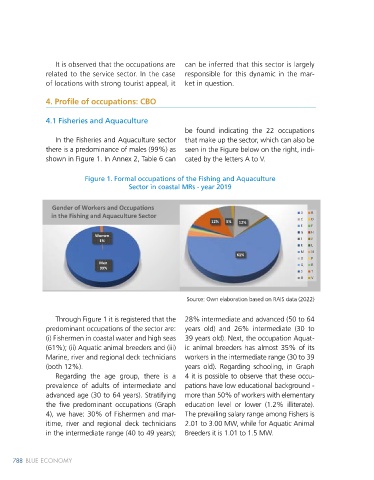
Figure 1. Formal occupations of the Fishing and Aquaculture M Coastal and High Seas Fishermen 2038 9 2047
Sector in coastal MRs - year 2019 N Multipurpose Fishermen 89 3 92
T Support Workers for Fisheries Extractivism 410 1 411
Gender of Workers and Occupations U Trabalhadores de Apoio ao Extrativismo da Pesca 175 2 177
Gender of Workers and Occupations
in the Fishing and Aquaculture Sector
in the Fishing and Aquaculture Sector A B A B Others Sum of other occupations in the Sector 212 22 234
12%
12% 5% 12% 5% 12% C D C D Source: Own elaboration based on RAIS data (2022)
E F E F
G H G H
Women Women 4.2 Extraction and Energy Among the 28 occupations mentioned
1% 1% I J I J
K L K L Directing the analysis to the occupa- (Annex 2, Table 7), only two (Biologists
M N M N
61% 61% tions covered by the Extraction and Ener-
O P O P and the like; Waiters, Barmen, butlers and
Men Men Q R Q R gy Sector, a greater diversity of functions
99% 99% sommeliers) are highlighted by the female
S T S T
U V U V and concentration of the male gender gender, and a tie in another (Environmental
can be observed. Engineers and Related).
! !
Source: Own elaboration based on RAIS data (2022)
Figure 2. Formal occupations of the Extraction and Energy sector in coastal MRs -
Through Figure 1 it is registered that the 28% intermediate and advanced (50 to 64 year 2019
predominant occupations of the sector are: years old) and 26% intermediate (30 to Gender of Workers and Occupations 9% A A B B
Gender of Workers and Occupations
9%
(i) Fishermen in coastal water and high seas 39 years old). Next, the occupation Aquat- Gender of Workers and Occupations 9% A C C B D D
in the Extraction and Energy Sector
in the Extraction and Energy Sector
Gênero dos Trabalhadores e Ocupações
20%
Gênero dos Trabalhadores e Ocupações
(61%); (ii) Aquatic animal breeders and (iii) ic animal breeders has almost 35% of its Gênero dos Trabalhadores e Ocupações A A B B D D 9% A C B D 20% C E E G G D F F H H
9%
9%
in the Extraction and Energy Sector
do Setor de Extração e Energia
do Setor de Extração e Energia
C C
Marine, river and regional deck technicians workers in the intermediate range (30 to 39 do Setor de Extração e Energia Women 20% E E G G F F H H 25% E G F H 20% E G I I K K F H J J L L
25%
20%
20%
Women
12%
(both 12%). years old). Regarding schooling, in Graph Mulheres 25% Women II JJ 25% 25% I J 5% I K M M J L N N
12%
25%
5%
Mulheres
Mulheres
Regarding the age group, there is a 4 it is possible to observe that these occu- 12% 12% 12% 5% K K M M L L N N 5% K M L N 5% M O O N P P R R
12%
5%
Q Q
6%
prevalence of adults of intermediate and pations have low educational background - Men 6% O O P P R R 6% O Q P R 6% O S S P R T T
Men
Q Q
Q
6%
88%
Homens
88%
advanced age (30 to 64 years). Stratifying more than 50% of workers with elementary Homens Homens Men S S u u T T v v 6% S u T v 9% 6% S u u u x x T v v v w w
9%
6%
88%
88%
88%
9%
6%
the five predominant occupations (Graph education level or lower (1.2% illiterate). 6% 88% 9% x x y y w w 6% 9% 6% x y w z 9% x y y AA w z z AB
z z
4), we have: 30% of Fishermen and mar- The prevailing salary range among Fishers is AA AA AB AB AA AB y AA AA z AB AB
itime, river and regional deck technicians 2.01 to 3.00 MW, while for Aquatic Animal
in the intermediate range (40 to 49 years); Breeders it is 1.01 to 1.5 MW. Source: Own elaboration based on RAIS data (2022)
788 BLUE ECONOMY Overview of Occupations in Coastal Metropolitan Regions 789

